Why is the Employment Contract Broken
Introduction: The Social Contract Got a Pink Slip
Once upon a time, the employment contract was simple. You gave a company your loyalty and labour, and in return, you got stability, a pension, and maybe even a gold watch after a long and illustrious career.
That story is dead!
The social contract between employers and employees has been rewritten—not with a pen, but with an algorithm. And in this new draft, one party is getting screwed. Spoiler: it’s you.
Welcome to the age of the broken employment contract!
1. The Old Contract: Loyalty for Security
- What It Was: A predictable life path: job > promotion > retirement.
- What You Got: Health insurance, a pension, vacation time, and a sense of belonging.
- What It Meant: Workers felt invested. They stayed. They contributed.
| Feature | Then (Old Contract) | Now (Broken Contract) |
|---|---|---|
| Job Tenure | 10-30 years | 2-4 years |
| Retirement Benefits | Guaranteed pension | DIY pension roulette |
| Loyalty Incentives | Promotions, seniority | Layoffs, reorgs, gig work |
| Job Description | Stable and predictable | Ever-shifting & over-scoped |
2. The New Reality: Work Has Been Uberized
- Gigification: Contractors outnumber FTEs in many industries. Companies treat workers like apps: install, use, uninstall.
- AI & Automation: You’re not just competing with college grads. You’re competing with ChatGPT and a robot in Shenzhen.
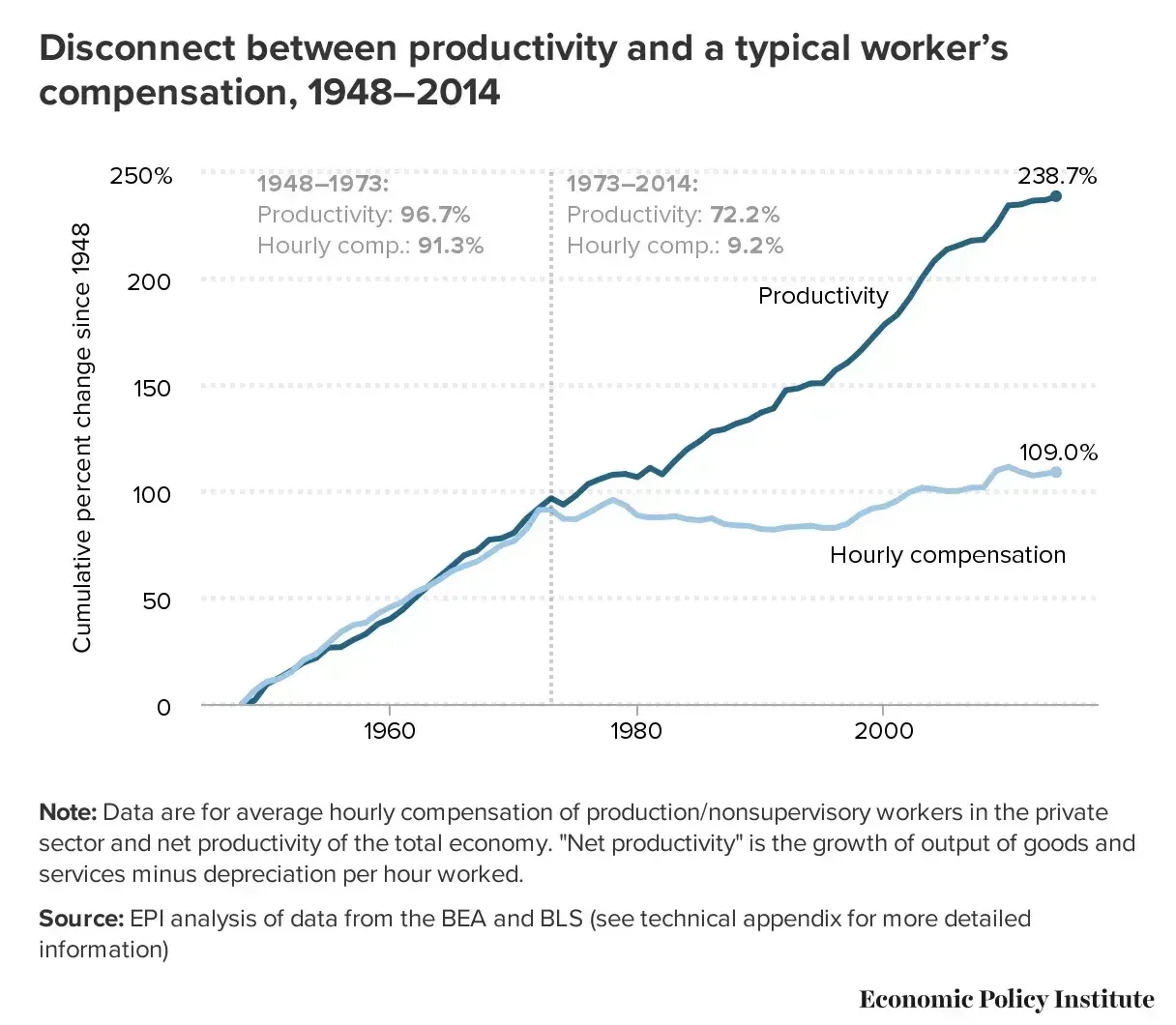
- Wage Stagnation: Productivity has skyrocketed. Wages? Flatlined.
- Wage Gap: While the
3. CEO-to-Worker Pay Ratio Over Time
- CEO Compensation Surge: From 1978 to 2023, CEO compensation increased by 1,085%, adjusted for inflation.
- Typical Worker Compensation: In the same period, the compensation for a typical worker grew by only 24%.
- 1965: CEOs earned 21 times more than the average worker.
- 2021: This ratio escalated to 399 times.
Key Insight: The CEO-to-worker pay ratio is now over 300:1. That’s not a market. That’s a hostage negotiation.
4. Burnout Is a Feature, Not a Bug
- Always-On Culture: Thanks to Slack, Zoom, Teams, your job now lives rent-free in your home.
- Work Creep: Titles stay the same. Responsibilities triple. Everybody is getting the reader field promotion --> More responsibilities for the same pay and benefits.
- Mental Health Epidemic: The workforce is anxious, depressed, and disillusioned—yet HR throws pizza parties.
Key Statistics:
- 52% of workers report burnout
- 1 in 3 employees plan to quit in the next 12 months
- 70% say their work doesn’t align with their purpose
5. Corporate Speak vs. Reality
| Corporate Message | Reality Check |
|---|---|
| "We're a family." | Families don’t conduct mass layoffs. |
| "We care about well-being." | But still schedule 7:00 AM meetings. Or, expect you to dial-in for that "important" call while on your family vacation. |
| "We empower you to lead." | Until you question leadership. |
| "We offer flexibility." | You can work from anywhere... always. |
Mini Takeaway: Language is the new camouflage. Don’t buy the buzzwords. Buy the action. Show me. Don't tell me!
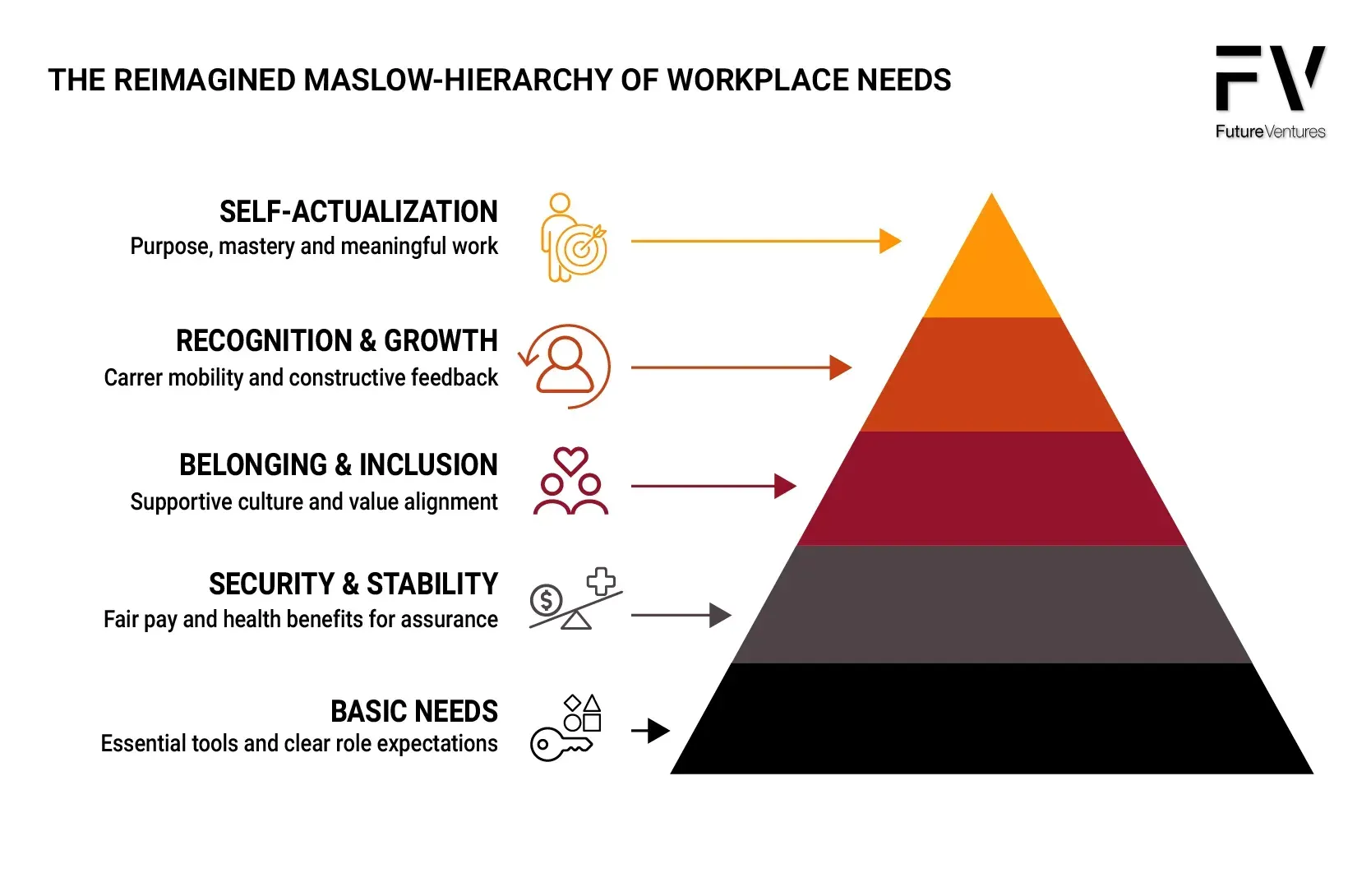
6. What Workers Want Now
- Autonomy: Freedom over hours, location, and tools. Do you work for a company that is mandating the Return-to-Office (RTO) 5 days a week?
- Alignment: A job that aligns with personal values
- Advancement: Clear paths, upskilling, and mobility
- Acknowledgement: Fair compensation, real feedback, not just annual surveys
7. Fixing the Broken Contract: The Future of Work
- Transparent Compensation Models (yes, post your salary ranges)
- Career Portability: Skills-based hiring, not just pedigree
- Shared Success: Equity, profit-sharing, and performance alignment
- Real Flexibility: Four-day workweeks, async collaboration, and sabbaticals
Analogy: Think of the old employment model like Blockbuster. Rigid, centralized, and slow. The new one? It needs to be more like Spotify: flexible, personalized, and on-demand.
Final Thoughts: If You Don’t Change the Game, You’re Just a Pawn
The employment contract is broken, but that’s not the end of the story. It’s the start of a new one. Smart companies will rewrite the terms to be fairer, more human, and more aligned with what modern workers truly value. The others? They’ll keep wondering why their best people are quietly quitting or loudly leaving.
So ask yourself—are you stuck in a system that treats you like a cog? Or are you ready to demand a new contract?
Build the new employment contract with us.
Related Insights and Thought Leadership to Explore